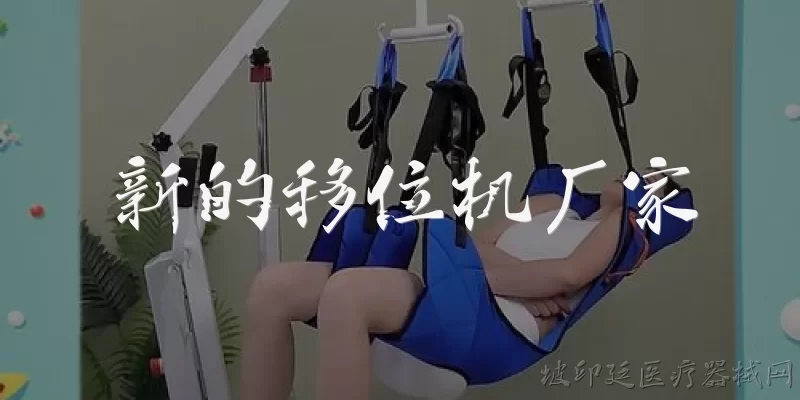
New patient lift manufacturer:What should a care facility consider when choosing a new patient lift manufacturer?
Q: What should a care facility consider when choosing a new patient lift manufacturer?
A: When evaluating a new patient lift manufacturer, care facilities should look beyond the initial purchase price and assess the total cost of ownership. Start by verifying the manufacturer's regulatory compliance, including FDA registration and ISO 13485 certification, as these signal a commitment to quality management. Check the breadth of the product line—ceiling lifts, floor lifts, sit-to-stand devices, and slings—to ensure compatibility and future scalability. Request detailed specifications on safe working load, battery life, and warranty terms, and ask for references from comparable facilities. Service and maintenance support is equally important: confirm response times, spare-parts availability, and whether technician training is offered. Finally, request a demonstration or trial period so staff can evaluate ergonomics, ease of use, and maneuverability in real resident rooms before committing to a long-term supply relationship.
Q: How can a new patient lift manufacturer demonstrate safety and regulatory compliance?
A: A credible new patient lift manufacturer should provide transparent documentation of its compliance with applicable standards. In the United States, patient lifts are regulated as Class II medical devices, so the manufacturer should hold FDA 510(k) clearance and maintain a registered establishment. Internationally, ISO 13485 certification for medical device quality management and ISO 10535 for hoists for transferring persons are key benchmarks. Ask for test reports covering load testing, stability, electrical safety, and battery performance, plus evidence of biocompatibility for sling materials. The manufacturer should also supply a clear instructions-for-use document, labeling compliant with local regulations, and a documented risk management process aligned with ISO 14971. Facilities should verify certificates directly with issuing bodies and confirm that adverse event reporting and recall procedures are in place before purchase.
Q: What support and training should a new patient lift manufacturer provide after purchase?
A: Post-purchase support often determines whether a lift program succeeds. A strong new manufacturer should offer structured installation and commissioning, including load testing of ceiling tracks where applicable. Staff training should cover safe operation, resident assessment, sling selection and fitting, battery charging, and daily pre-use checks, and it should be delivered both initially and on a refresher schedule. Look for a documented maintenance program with recommended service intervals, access to spare parts, and clear warranty terms covering motors, actuators, and control systems. Responsive technical support—ideally with defined service-level agreements—matters for minimizing downtime. The manufacturer should also provide user manuals, quick-reference guides, and training records suitable for inspections. Ask how software or firmware updates are handled and whether remote diagnostics are available, since these features increasingly differentiate manufacturers in the patient handling market.
Q: How does a new patient lift manufacturer fit into an existing safe patient handling program?
A: Introducing equipment from a new manufacturer should be integrated into an existing safe patient handling program rather than treated as a standalone purchase. Begin with a gap analysis of current equipment, sling inventories, and transfer tasks to identify where the new lifts add value without duplicating or conflicting with existing systems. Standardize sling attachment mechanisms where possible, since mixing incompatible slings and spreader bars creates safety risks. Update policies, resident handling assessments, and staff competencies to reflect the new devices, and document training completion. Consider a phased rollout with a pilot unit in one care area, collecting feedback on usability and resident comfort before wider deployment. Finally, review incident reports and staff injury data after implementation, and use that evidence to refine procurement decisions and maintenance schedules going forward.
Words of experience
Common scenarios of "New patient lift manufacturer"
【Nurse Manager】 Good morning. I understand you've been reviewing equipment options for our new patient lift program. What have you found so far?
【Procurement Specialist】 Morning. I've shortlisted three manufacturers. Two are established, but there's a newer one making some noise with a modular lift system. I wanted your clinical input before we go further.
【Nurse Manager】 A new manufacturer? That always makes me cautious. What do we know about their safety record and certifications?
【Procurement Specialist】 They're ISO 13485 certified and FDA registered. Their lifts passed independent load testing at 1.5 times the rated capacity. But they've only been in the market about four years.
【Nurse Manager】 Four years is short. Have they had any recalls or adverse event reports?
【Procurement Specialist】 None reported so far. I checked the FDA database and their own service records. They also publish their test data openly, which is a good sign.
【Nurse Manager】 That transparency is encouraging. What's their product range? We need ceiling lifts, sit-to-stand, and floor lifts.
【Procurement Specialist】 They cover all three. The modular design means ceiling tracks and floor units share components, which could simplify maintenance and spare parts.
【Nurse Manager】 Shared components sound efficient, but if one part fails, could it affect multiple devices at once?
【Procurement Specialist】 Fair point. Their lead engineer said the common parts are the battery and control module, and they keep those in stock locally with a 48-hour replacement guarantee.
【Nurse Manager】 Forty-eight hours is reasonable. What about staff training? Our team needs hands-on time with any new equipment.
【Procurement Specialist】 They offer on-site training and a train-the-trainer program. They also provide an e-learning module for refreshers.
【Nurse Manager】 Good. Now, the big question—how does their pricing compare to the established brands?
【Procurement Specialist】 About 15 percent lower on initial purchase, and their service contracts are roughly 20 percent cheaper. But being new, they may lack long-term reliability data.
【Nurse Manager】 Cheaper is appealing, but I don't want to trade savings for downtime or injuries. Can we get a trial unit?
【Procurement Specialist】 Yes, they offered a 30-day pilot with two ceiling lifts and one floor lift, including training, at no cost.
【Nurse Manager】 That's a strong offer. Let's run the pilot on our busiest unit and collect feedback on ease of use and battery life.
【Procurement Specialist】 I'll set that up. Should we also ask for references from other facilities using their lifts for at least a year?
【Nurse Manager】 Definitely. And ask about their response times for repairs during the pilot. That will tell us a lot.
【Procurement Specialist】 I'll draft the pilot agreement and reference requests today. If the trial goes well, we can revisit the contract terms.
【Nurse Manager】 Sounds like a plan. Keep me posted, and let's schedule a debrief with the nursing staff after two weeks of use.