What is Transcranial Doppler (TCD) Ultrasound?:What is Transcranial Doppler (TCD) Ultrasound?
Q: What is Transcranial Doppler (TCD) Ultrasound?
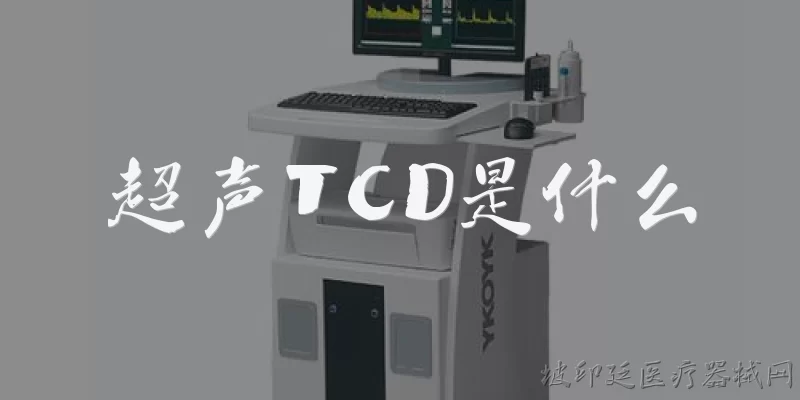
A: Transcranial Doppler (TCD) ultrasound is a non-invasive diagnostic technique that uses low-frequency pulsed Doppler ultrasound to measure blood flow velocities in the major intracranial arteries through the skull. According to the American Academy of Neurology's 2026 practice update, TCD is primarily indicated for evaluating sickle cell disease stroke risk, detecting vasospasm after subarachnoid hemorrhage, and assessing intracranial stenosis. The procedure typically employs a 2 MHz transducer placed at temporal, orbital, and suboccipital windows. Unlike transcranial color-coded duplex, standard TCD provides spectral waveforms without B-mode imaging, making it portable and cost-effective for bedside monitoring in neurocritical care settings.
Q: How does TCD ultrasound work technically in 2026?
A: TCD ultrasound operates on the Doppler principle: a 2 MHz pulsed-wave transducer emits ultrasound that reflects off moving red blood cells, and the frequency shift calculates flow velocity. The 2026 International Society for Neurovascular Disease guidelines emphasize using power motion-mode TCD (PMD-TCD) for improved vessel identification and multi-gate emboli detection. Modern systems incorporate real-time spectral analysis and automated peak systolic velocity measurements. The temporal window (above zygomatic arch) insonates the middle, anterior, and posterior cerebral arteries; the orbital window evaluates the ophthalmic artery and carotid siphon; the suboccipital window assesses vertebral and basilar arteries. Depth ranges from 40-80 mm for temporal vessels and 60-120 mm for posterior circulation, with velocity norms adjusted for age, hematocrit, and CO2 levels.
Q: What are the primary clinical applications of TCD in 2026?
A: The 2026 American Heart Association/American Stroke Association guidelines list several evidence-based TCD applications. First, stroke risk stratification in pediatric sickle cell disease: annual TCD screening with time-averaged mean maximum velocity ≥200 cm/s triggers transfusion therapy. Second, vasospasm monitoring after aneurysmal subarachnoid hemorrhage, where middle cerebral artery velocities >120 cm/s suggest mild and >200 cm/s severe vasospasm. Third, detection of right-to-left shunts via agitated saline bubble studies for cryptogenic stroke. Fourth, assessment of cerebral autoregulation and CO2 reactivity. Emerging 2026 uses include emboli detection in carotid stenosis, monitoring during carotid endarterectomy, and evaluating brain death by demonstrating absent intracranial flow patterns.
Q: What are the limitations of TCD ultrasound compared to other imaging?
A: Despite its advantages, TCD has notable limitations highlighted in the 2026 European Stroke Organisation recommendations. Approximately 10-15% of patients lack adequate temporal bone windows, especially older adults and those of African or Asian descent, limiting insonation. TCD provides velocity data but not direct anatomic imaging, unlike transcranial color-coded duplex or MRA/CTA. It cannot reliably differentiate stenosis from vasospasm without clinical context. Operator dependence remains significant, with inter-rater variability up to 20% for basilar artery velocities. The technique also cannot assess small vessels or posterior circulation branches well. Consequently, 2026 guidelines recommend TCD as a complementary, not replacement, tool for CT angiography, MR angiography, or digital subtraction angiography in comprehensive neurovascular evaluation.
Dialogue about
Common scenarios of "What is Transcranial Doppler (TCD) Ultrasound?"
【Patient】 Hi, my doctor recommended a Transcranial Doppler Ultrasound. Can you explain what that is?
【Neurologist】 Of course. Transcranial Doppler, or TCD, is a non-invasive ultrasound test that measures blood flow in the major arteries of the brain. It uses sound waves to evaluate the velocity of blood flow through the cerebral vessels.
【Patient】 How is it different from a regular ultrasound?
【Neurologist】 Regular ultrasounds are used for many parts of the body, but TCD is specifically designed to penetrate the skull bone and assess the intracranial circulation. It's a specialized technique that requires training to interpret.
【Patient】 What conditions can it detect?
【Neurologist】 TCD is commonly used to detect narrowing or blockages in brain arteries, assess risk of stroke, monitor blood flow after subarachnoid hemorrhage, and evaluate sickle cell disease in children. It can also be used to confirm brain death.
【Patient】 Is the procedure painful or risky?
【Neurologist】 Not at all. It's completely painless and safe. You'll lie down, and a technician will place a small probe on your head. You might feel a little pressure, but no pain. There's no radiation involved.
【Patient】 How long does it take?
【Neurologist】 The test usually takes about 30 to 60 minutes, depending on the areas being examined. It's typically done on an outpatient basis.
【Patient】 Do I need to do anything to prepare?
【Neurologist】 No special preparation is needed. You can eat and take your medications as usual. Just avoid caffeine before the test, as it can affect blood flow.
【Patient】 What happens during the test?
【Neurologist】 You'll lie on a bed. The technician will apply a gel to the probe and place it on different areas of your head—usually near the temples, eyes, and back of the neck. You'll hear a pulsing sound, which is the blood flow being measured. It's important to stay still and relaxed.
【Patient】 Will I get the results right away?
【Neurologist】 The technician won't interpret the results. A neurologist or radiologist will analyze the data and send a report to your doctor, usually within a few days.
【Patient】 Are there any alternatives to TCD?
【Neurologist】 Yes, other tests like MRI or CT angiography can also assess brain blood flow, but they are more expensive and may involve contrast dye or radiation. TCD is a safe, cost-effective, and non-invasive first-line option.
【Patient】 Thank you. That makes me feel much better about the test.
【Neurologist】 You're welcome. If you have any more questions, feel free to ask. Good luck with your test!