X-ray inspection equipment:What is X-ray inspection equipment and how does it work?
Q: What is X-ray inspection equipment and how does it work?
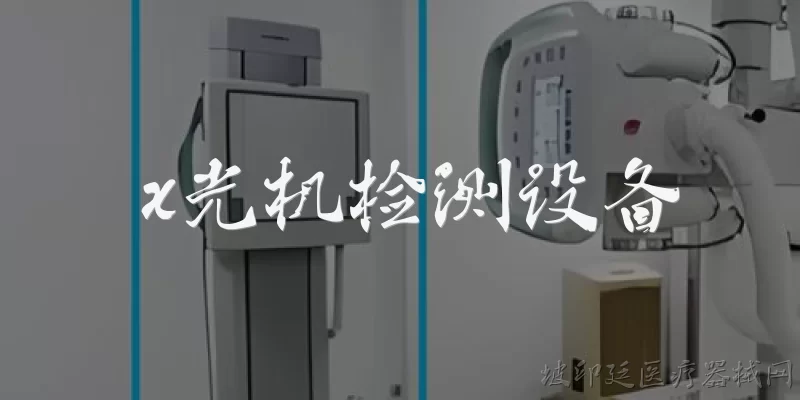
A: X-ray inspection equipment is a type of non-destructive testing technology that uses X-rays to examine the internal structure of objects without damaging them. It works by generating X-rays through a high-voltage X-ray tube, which are directed at the item being inspected. As the X-rays pass through the object, they are absorbed at different rates depending on the material's density and atomic number. A detector on the opposite side captures the attenuated X-rays and converts them into a grayscale image, where denser materials appear darker and less dense materials appear lighter. This allows operators to see internal defects, foreign objects, or structural anomalies. Modern systems often include digital detectors and advanced software for real-time imaging, 3D computed tomography (CT), and automated defect recognition. X-ray inspection is widely used in industries such as manufacturing, aerospace, electronics, and food safety to ensure quality and integrity. The key advantage is its ability to inspect hidden areas without disassembly, making it indispensable for critical applications where failure could be catastrophic.
Q: What are the main applications of X-ray inspection equipment in different industries?
A: X-ray inspection equipment is used across diverse industries for quality control and safety assurance. In manufacturing, it inspects castings, welds, and assembled parts for cracks, voids, and inclusions. The electronics industry relies on X-ray systems to examine solder joints on printed circuit boards (PCBs), especially ball grid arrays (BGAs) and chip-scale packages, where visual inspection is impossible. In aerospace, X-ray inspection verifies the integrity of turbine blades, engine components, and critical structures, helping prevent catastrophic failures. The food industry uses X-ray systems to detect foreign contaminants like metal, glass, or bone in packaged products, ensuring consumer safety and compliance with regulations. Pharmaceutical companies employ X-ray inspection to check pill counts, fill levels, and package integrity. Automotive manufacturers use it for inspecting aluminum castings, batteries, and safety components. Additionally, X-ray equipment is vital in security screening at airports and public venues for baggage and cargo inspection. Each industry tailors the technology to its specific needs, choosing between 2D imaging, 3D CT, or inline systems. The common goal is to detect hidden defects or contaminants that could compromise quality, safety, or performance, making X-ray inspection a versatile and essential tool.
Q: What should you consider when choosing X-ray inspection equipment for your business?
A: When selecting X-ray inspection equipment, several factors determine the best fit for your application. First, define your inspection goals: do you need 2D imaging for simple defect detection, or 3D computed tomography (CT) for complex internal structures? Resolution and magnification are critical—higher resolution reveals finer details but may increase cost and inspection time. Consider the size and density of your samples; the system's X-ray power (kV and mA) must penetrate the material effectively. Throughput requirements matter for inline production; automated systems with high-speed conveyors and software algorithms boost efficiency. Safety features are paramount: ensure proper shielding, interlocks, and compliance with radiation safety standards. Ease of use and software capabilities also impact productivity—look for intuitive interfaces, automated defect recognition, and reporting tools. Budget includes not only purchase price but also maintenance, calibration, and training costs. Finally, vendor support and service availability are crucial for minimizing downtime. Assess whether a cabinet system, conveyor-based inline system, or portable unit suits your workflow. By carefully evaluating these factors, you can invest in X-ray inspection equipment that enhances quality control, meets regulatory requirements, and delivers long-term return on investment.
Words of experience
Common scenarios of "X-ray inspection equipment"
【Sales Representative】 Good morning! How can I help you with our X-ray inspection equipment today?
【Customer】 Hi, I'm looking for an X-ray system for our electronics manufacturing line. We need to inspect PCB assemblies for defects.
【Sales Representative】 Great! We have several models suitable for PCB inspection. What size are your boards?
【Customer】 Mostly around 12 by 18 inches, but we also have some smaller ones.
【Sales Representative】 Our XR-2000 model can handle boards up to 20 by 20 inches. It has a high-resolution detector and can detect defects down to 5 microns.
【Customer】 That sounds impressive. What about the inspection speed? We have a high-volume production line.
【Sales Representative】 The XR-2000 can inspect a typical board in about 30 seconds, depending on complexity. It also supports automated inline integration.
【Customer】 Inline integration is important. Can it communicate with our MES system?
【Sales Representative】 Yes, it supports SECS/GEM and other standard protocols. We can also customize the interface if needed.
【Customer】 What about the X-ray tube life and maintenance?
【Sales Representative】 The tube typically lasts 10,000 to 15,000 hours. We offer preventive maintenance plans and remote diagnostics.
【Customer】 How about the software? Is it user-friendly?
【Sales Representative】 Absolutely. Our software has an intuitive GUI, automated defect recognition, and report generation. We also provide training.
【Customer】 Can you give me a quote for the XR-2000 with inline configuration?
【Sales Representative】 Of course. I'll need some more details about your specific requirements. Can we schedule a call to discuss?
【Customer】 Sure, how about tomorrow at 10 AM?
【Sales Representative】 That works for me. I'll send you a calendar invite and a preliminary specification sheet.
【Customer】 Great. Also, do you offer a demo unit for evaluation?
【Sales Representative】 Yes, we can arrange a demo at our facility or bring a unit to your site for a trial.
【Customer】 Perfect. Let's discuss that tomorrow. Thanks for your help!