
Identify surgical instrument purposes:How can a nurse identify the purpose of a scalpel in the operating room?
Q: How can a nurse identify the purpose of a scalpel in the operating room?
A: A scalpel is identified by its handle and detachable blade, and its purpose is to make precise incisions in skin and tissue during surgery. Nurses should recognize the blade shape and size, as different blades suit different procedures, such as a #10 blade for large incisions and a #15 for fine work. Confirming the scalpel's intended use before handing it to the surgeon improves safety and efficiency. Understanding its purpose also helps in anticipating the surgeon's needs and maintaining sterile field protocol.
Q: What is the purpose of surgical forceps, and how are they identified?
A: Surgical forceps are identified by their tweezer-like design with two prongs, available in varieties such as tissue forceps with teeth and smooth dressing forceps. Their purpose is to grasp, hold, or manipulate tissue and dressings during procedures. Tissue forceps with teeth secure slippery tissue, while smooth forceps handle delicate structures or dressings. Recognizing the type helps the surgical team select the correct instrument for atraumatic or secure gripping. Proper identification prevents tissue damage and supports efficient surgical workflow.
Q: How do you identify the purpose of a surgical retractor among other instruments?
A: A surgical retractor is identified by its hooked or angled shape designed to hold back wound edges or organs, exposing the operative site. Common types include handheld retractors like the Army-Navy and self-retaining retractors like the Weitlaner. Its purpose is to maintain a clear field of view and access for the surgeon. Identifying the specific retractor type helps the team anticipate exposure needs and select the right tool. Correct use improves visualization and reduces fatigue during long procedures.
Q: What is the purpose of surgical scissors, and how can they be distinguished from other instruments?
A: Surgical scissors are identified by their two finger rings and cutting blades, with types such as Mayo for heavy tissue and Metzenbaum for delicate dissection. Their purpose is to cut tissue, sutures, or dressings with precision. Mayo scissors have straight or curved blades for dense tissue, while Metzenbaum scissors have longer shanks for fine work. Distinguishing scissors from hemostats is important since hemostats have grasping jaws. Recognizing the correct scissors ensures appropriate tissue handling and prevents inadvertent damage during surgery.
Q: How can a surgical technologist identify the purpose of a needle holder?
A: A needle holder is identified by its short, stout jaws and ratcheted handle, distinct from hemostats by its cross-hatched gripping surface designed for needles. Its purpose is to securely hold a surgical needle while suturing tissue. The technologist should recognize that needle holders vary in jaw curvature and size for different suture needs. Correct identification ensures the surgeon receives the proper instrument for suturing, improving needle control and reducing the risk of needle slippage or injury during wound closure.
Words of experience
Common scenarios of "Identify surgical instrument purposes"
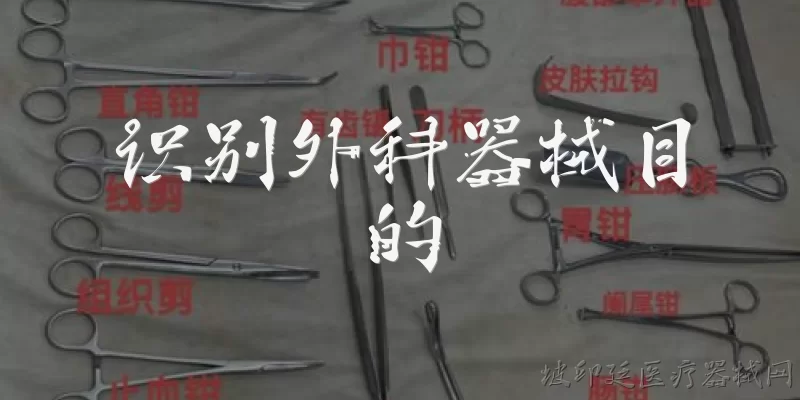
【Scrub Nurse】 Good morning, everyone. Before we begin the procedure, let's do a quick instrument recognition drill. I'll hold up each instrument, and the new surgical tech will identify its purpose. Ready?
【Surgical Tech】 Ready. I've been studying the tray layout, so I'm eager to test myself.
【Scrub Nurse】 First one: this is a scalpel with a #10 blade. What is it used for?
【Surgical Tech】 A #10 blade is used for making large incisions through skin and subcutaneous tissue. The rounded belly gives good cutting control.
【Scrub Nurse】 Correct. Next, this long instrument with jaws and a ratchet—what is it?
【Surgical Tech】 That's a Kelly clamp. It's a hemostatic forceps used to clamp blood vessels and control bleeding, and it can also hold tissue.
【Scrub Nurse】 Good. How does a Kelly differ from a Crile or a Rochester-Pean?
【Surgical Tech】 The Kelly has a half-length serrated jaw, while the Crile has full-length serrations. The Rochester-Pean is heavier and larger, used for clamping larger vessels or pedicles.
【Scrub Nurse】 Nice distinction. Now this instrument with a curved, pointed tip and no ratchet—what's it called?
【Surgical Tech】 That's a Mayo scissors, curved. It's used for cutting dense tissue like fascia and for dissecting heavier tissue, not for fine work.
【Scrub Nurse】 Right. And this smaller one with sharp, curved tips?
【Surgical Tech】 Metzenbaum scissors. They're for delicate dissection of fine tissue, like in the neck or around vessels.
【Scrub Nurse】 Let's move on. This instrument has a handle with a ratchet and two prongs at the tip—what is it?
【Surgical Tech】 That's a towel clip. It's used to secure sterile drapes to the patient's skin and to hold towels in place.
【Scrub Nurse】 Good. Here's one with a long handle and a small, curved, spoon-like tip.
【Surgical Tech】 That's a curette. It's used for scraping or scooping tissue, often in bone surgery or for removing debris from a cavity.
【Scrub Nurse】 Correct. Now, this instrument looks like a scissors but has a blunt, curved tip and a ratchet.
【Surgical Tech】 That's a hemostatic forceps with curved tips, often called a curved Kelly or a mosquito if it's smaller. The ratchet lets it lock to hold a vessel.
【Scrub Nurse】 Exactly. Last one: this long, thin instrument with a small, sharp hook at the tip.
【Surgical Tech】 That's a skin hook. It's used to gently retract and lift the edges of skin during delicate procedures like plastic surgery or small excisions.
【Scrub Nurse】 Excellent. You've identified all the key instruments correctly. Let's proceed with the case.